


Commemorative plaque unveiled on first National Day of the Abolition of Slavery
Victoria, Seychelles | February 1, 2026, Sunday @18:16 in National » General | By: Betymie Bonnelame Editor English News | Views: 457

President Patrick Herminie and Cecilia Adrienne unveiled the commemorative plaque. (State House)
A commemorative plaque for a new monument to mark the Abolition of Slavery Day was unveiled on Sunday, February 1st, during the inaugural ceremony. President Patrick Herminie and Cecilia Adrienne unveiled the plaque at a location near the National Library, where the new monument will be unveiled next year.
According to Master of Ceremony, Darrel Antat, the unveiling marks the site as a place of remembrance and will be a dedicated space for reflection, honouring the memory and legacy of those affected by slavery in Seychelles.
In his address, President Herminie said the event was not only to mark a date in history but to listen to its echoes.
“The abolition of slavery was not simply the end of a system; it was the beginning of a long and unfinished journey. A journey from enforced silence to voice, from dispossession to belonging, from survival to self-definition. Slavery shaped our nation in profound ways,” he said.
Herminie said that although slavery tore people from their homelands, stripped them of their names and lineages and scattered them across oceans, from this rupture emerged something extraordinary, a Creole people.
“An identity not born of a single origin but forged through resilience, adaptation and creativity. Our identity is not confined to nationality alone; it is lived, layered and shared. It is an identity as shaped as much by loss as by imagination. The ocean that surrounds us reminds us of this truth. It is a source of beauty and sustenance, but it is also a witness,” he emphasised.
The President said, "While we commemorate the first event today, we must be honest with ourselves. What is freedom? Has slavery really been abolished? In certain forms, inequality, discrimination and marginalisation still exist in our way of life. Where we put certain people aside and refuse to accept them as one of our brothers and sisters. Unconscious bias.”
He made mention of the poem recited by Tyler Roselie at the beginning of the ceremony, entitled “En Let Pour Mon Met (A Letter to My Master).”
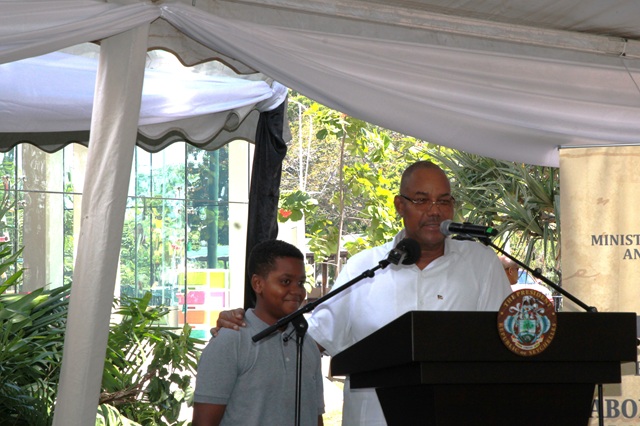 |
| President Herminie and Tyler. (State House) Photo Licence: CC BY |
“Tyler made a powerful statement today. He said he hopes the chain will break in our minds, and I think it is your duty to do it. Our history is not there to imprison us in the past. It is there to make us understand, to do better and honour those who carried us on their shoulders towards a better Seychelles. History is there to remind us that our past should be a source of dignity and not division, for us to learn lessons and not leave souvenirs. That is why art, dialogue and intergenerational conversations matter,” said Herminie.
On her side, the Minister for Tourism and Culture, Amanda Bernstein, spoke about how slavery played a central role in the history of Seychelles.
“From the late 18th century, enslaved Africans formed the majority of the population. They were brought across the Indian Ocean to work on plantations, in homes, and on the building of the early settlements. Their labour laid the foundations of our society,” she shared.
“Over 2,000 were locally born Creole slaves. Slavery was officially abolished in Seychelles on the 1st of February, 1835, but freedom in law did not immediately mean freedom in life. Many formerly enslaved people faced hardship and limited opportunity,” the Minister added.
She said that from this history emerged the Creole society that Seychelles knows today.
“Our language, culture, and traditions were shaped by people from different origins, forced to adapt, to communicate, and to survive together. Creole identity was not inherited from one place; it was created here through resilience. The ocean surrounding us reminds us of this past. It carried forced journeys and separation, but it also witnessed the formation of a new people. Understanding this history helps us better understand ourselves,” said Bernstein.
As part of the ceremony, two of the traditional Seychellois dances, although rarely performed, Tinge and Sokwe, took centre stage. MC Antat explained both dances before a group of dancers presented the expressive part of the Seychellois heritage.
“Sokwe is a traditional dance rooted in African communal practices. Historically, dancers wore costumes made from banana leaves and other natural materials following the movement of a lead dancer. Sokwe was performed during village gatherings and ritual occasions, often in the evening to chase away evil spirits and to strengthen community bonds. The sokwe dance is considered an endangered tradition in need of safeguarding,” he said.
|
|
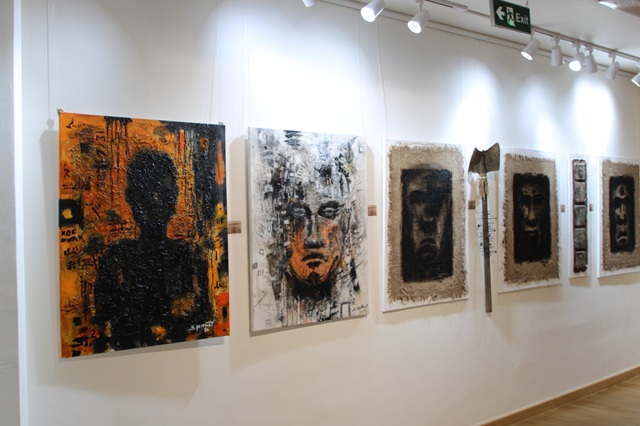
| Two exhibitions will also open to the public from February 3 to March 3. Photo Licence: CC BY |
The event ended with a commemorative song that was sung for the first time, “En Refren Lespwar,” which is a tribute to the resilience of the Seychellois people's identity. The song was written by a local legend in music and a defender of the Seychellois culture, Jean-Marc Volcy, accompanied by several young artists.
Other activities are planned as part of the celebration, and these include two exhibitions which will open at the National Gallery from February 3 to March 3, entitled ‘Echoes Across the Ocean and Memory,’ and Enslavement and Identity.’
